
By Ava Abtahi on behalf of Quiosq
It should come as no surprise that we are witnessing increased Euroscepticism and a rising far-right in Europe in 2026. This is illustrated by parties like Italy’s Fratelli d’Italia, which grew from 1.43% in the parliamentary seats in previous elections to a whopping 59.25% in the last elections and Germany’s Alternative für Deutschland, doubling its support from 11.28% in 2021 to 24.13% in 2025 (Mumford 2025). Furthermore, some years back, the European Commission reported that “more than one in four people voted for a Eurosceptic party in the last national election” (cohesiondata.ec.europa.eu 2023). How, then, to combat its consequences, notably, the reinforcement of boundaries between countries and, in turn, an environment that becomes increasingly hostile towards the coexistence of multiple cultures?
Though it’s a complex issue affecting the whole European continent and beyond, what better way to do this than through food? As mundane and as banal as it sounds (for those who have the privilege of eating properly every day, that is), it’s “a medium through which we gather, socialize, and create bonds” where “we celebrate, commemorate, tend to one another, and enact our rituals through food”, as explained by psychology professor Ara Norenzayan (arts.ubc.ca 2024). In other words, it has much cultural and social value.
Food can help transcend boundaries that divide different parts of Europe since, whether governments want to admit it or not, we have shared food heritage, notably because of trading. As Frances Steel and Claire Lowrie (2024: 573) explain, European imperial expansion from the early modern period sped up and grew food’s movement worldwide, rendering food “a driving force of empire”. Fast-forward to the 21st century, the Food and Agriculture Organization of the UN states that the 2010s and 2020s experienced a massive increase in food and agricultural trade, with it having nearly quintupled between 2000 and 2022 (openknowledge.fao.org 2024).
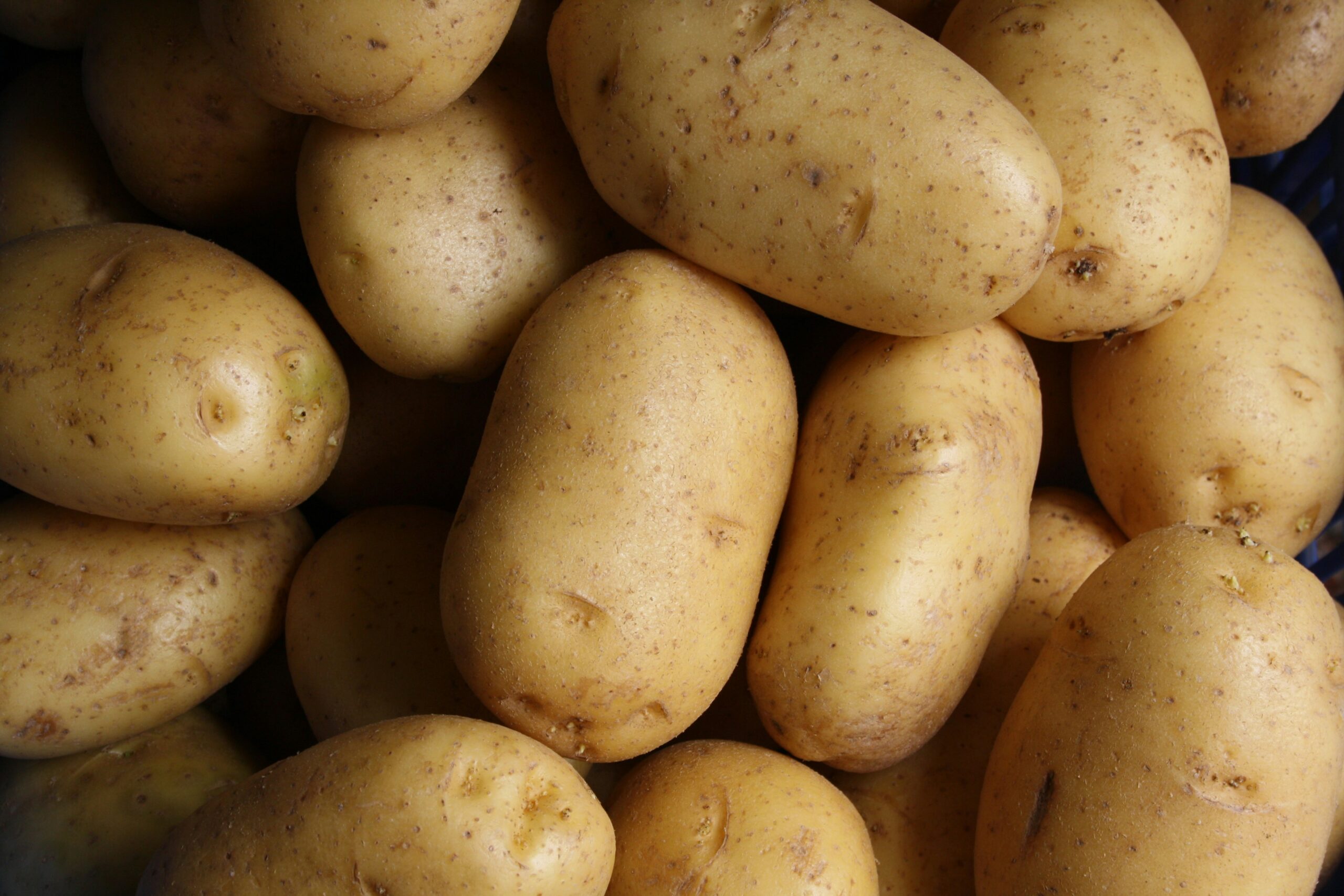
Now, think of the potato. While indigenous to the Andes region of Latin America, this starchy food was then introduced to Europe from Peru around the 16th century by Spanish colonizers and travelers (Food and Agriculture Organization 2024). Now, it’s practically everywhere on the small continent, and its consumption is generally highest in Eastern Europe, with pretty high levels in Northern Europe and in some parts of Western Europe, as seen in the map below. The potato has become a staple food in many countries and it’s no wonder, then, that the small continent has so many dishes revolving around it (think of France’s “gratin dauphinois”, German “kartoffelsalat” and Polish “pierogi”, to name but a few).
Embracing the diversity of dishes across Europe while also acknowledging their shared traits is really important if we want to promote social cohesion in Europe through food. Indeed, there are European initiatives and projects that are working on this. Funded by the European Union’s Horizon 2020 research and innovation programme, the initiative FOOD2GATHER “explores the relations between food and public spaces in the context of migration” (heranet.info n.d.). By organizing various food-related activities and practices, the project “addresses the way people connect with others and the environment physically, socially, politically and symbolically”, exploring the role of food in exclusion and inclusion processes in European societies (ibid.). Similarly, the Food is Culture project, co-financed by the European Union’s Creative Europe Program, celebrates “the wealth and uniqueness of Europe’s cultural diversity” by “safeguarding and promoting our shared food heritage” (Slow Food International 2025).
With the 2026 local elections in the UK resulting in Reform UK gaining control of its first London council and with France’s national elections next year pointing towards politicians like far-right Jordan Bardella, Europe is nowhere near over with the growth of nationalistic, xenophobic and racist sentiments.
Gastronationalism, where food production, distribution and consumption are used to strengthen a country’s nationalistic identity, and where its promoters assert “the superiority of their own traditions over those of other peoples and countries” (Barca 2024), is one way in which food is used to support these patterns in the continent.
By being more active in engaging with the diversity there is in the food heritage landscape, food projects like FOOD2GATHER and Food is Culture should make us realize that we don’t have to wait for top-down, government-led policy-making projects to “save the day” from ultra-nationalism and Euroscepticism. Initiatives from the bottom up that rely on community engagement can also be taken. Projects like those mentioned in this blog should make us realize that differences between people and cultures are worth celebrating instead of ridiculing and that, because of our shared histories and heritage of food, we’re more similar than we think at the same time. Working towards social cohesion is already tricky as it is, but it will prove even tougher if we’re not ready to recognize all this and if we’re not open to adopting a curious mentality towards each other’s foods, rather than one driven by nationalistic superiority complexes.
Bibliography
Steel, G., & Lowrie, M. (n.d.). [Title of article unknown—please verify from PDF first page]. [Journal Name Unknown]. https://watermark02.silverchair.com/shae050.pdf
Food and Agriculture Organization of the United Nations. (2024). The state of agricultural commodity markets 2024: Patterns and evolution of food trade. https://openknowledge.fao.org/server/api/core/bitstreams/7ca7c051-6ad2-4595-820b-c373fdb365f1/content/state-of-agricultural-commodity-markets/2024/pattern-evolution-food-trade.html
HERA. (n.d.). Food2Gather: Exploring foodscapes as public spaces for integration. https://heranet.info/projects/public-spaces-culture-and-integration-in-europe/food2gather-exploring-foodscapes-as-public-spaces-for-integration/
Slow Food. (n.d.). Food is culture. https://www.slowfood.com/funded-projects/food-is-culture/
Voxeurop. (n.d.). Gastronationalism: Cuisine, food sovereignty and identity. https://voxeurop.eu/en/gastronationalism-cuisine-food-sovereignty/
Food and Agriculture Organization of the United Nations. (n.d.). The potato’s travel through ages and continents. https://www.fao.org/newsroom/story/the-potatos-travel-through-ages-and-continents/en
European Commission. (n.d.). EU discontent and the regional development trap. https://cohesiondata.ec.europa.eu/stories/s/EU-discontent-and-the-regional-development-trap/75vr-t3eu/
Mumford, A. (n.d.). The rise of far-right parties in Europe: Causes, trends, and implications. Atlas Institute. https://atlasinstitute.org/the-rise-of-far-right-parties-in-europe-causes-trends-and-implications/
Photo by Lars Blankers on Unsplash
Leave a Reply