
Mihăiță Liviu Chelaru and Coralia Costaș on behalf of Complexul Muzeal National Moldova Iasi
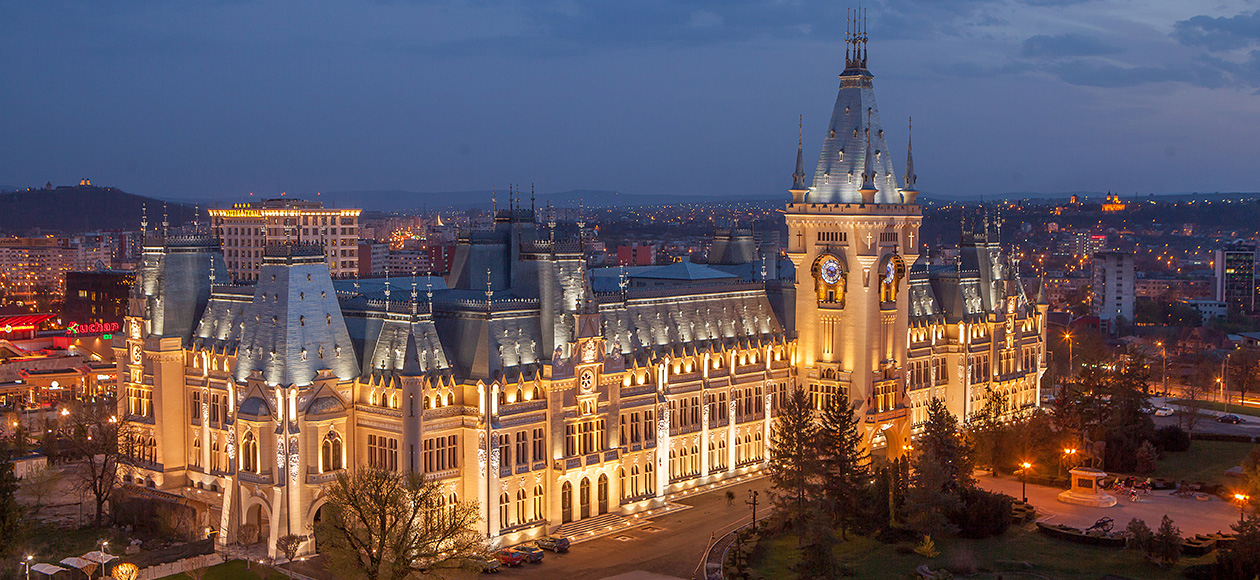
The Art Museum of Iasi, founded on October 26, 1860, was the first art collection established in Romania. Over time, the museum operated in several different locations, and since 1957, its impressive collection has been housed in the Palace of Culture – a landmark of Iasi built between 1906 and 1925 based on the designs of architect I.D. Berindei. Scarlat Vârnav is regarded as the founder of the Iași Pinacoteca, having acquired a number of valuable paintings from the historic collection of the Marquis Alexandre Marie Aquadode Las Marismas del Guadalquivir, Viscount of Monte Rico (1784–1842). The marquis was the owner of a renowned art gallery in Paris, which showcased works ranging from Renaissance masterpieces to decorative arts and period furniture. His gallery was celebrated as one of the most prestigious in Europe at the time, housing paintings, sculptures, and fine furnishings by legendary artists such as Raphael, Leonardo da Vinci, Giulio Romano, Giorgione, Veronese, Bellini, Caravaggio, Carlo Dolci, Tintoretto, Tiepolo, Titian, Correggio, Guido Reni, Mantegna, Luca Giordano, Rembrandt, Rubens, Dürer, Lucas van Leyden, Jordaens, and Van Dyck, among others. After the Marquis’s death, the French government acquired the most valuable pieces from his collection, while the remaining works (about 1.000 in total) were sold at four successive auctions held between 1843 and 1845. During the 1845 auction in Paris, Sofronie Vârnav, a Moldavian student and member of the 1848 generation studying in the French capital, attended the sale. Acting on the advice of Gheorghe Panaiteanu, who would later become the first director of the Iași Art Museum, Vârnav purchased the entire lot, consisting of 16 paintings by distinguished artists such as Caravaggio, Murillo, Pietro Liberi, Philippe de Champaigne, and Egbert van Hemskerk. In 1857, the donor Scarlat Vârnav established his residence at the Neamț Monastery, and the following year, in 1858, he embraced monastic life. Following monastic tradition, he took a new name – Father Sofonie Vârnav – by which he is most often remembered. The decision to found an art museum in Iași was welcome by the intellectuals of the time, who contributed to the enrichment of its heritage like: Costache Negri (39 paintings, some of them attributed to famous European painters, such as: Van Dyke, Nicolas Poussin, Tintoretto, Paolo Cagliari Veronese, Francesco Solimena, Jan Both), Costache Dasiade (30 European art works), and Iancu Codrescu.
Over time, the museum’s heritage expanded through both donations and acquisitions, steadily enriching its Romanian and foreign art collections. Under the leadership of painter Ștefan Dumitrescu in the 1930`s, the museum gained numerous works by prominent Romanian artists, including Gheorghe Petrașcu, Theodor Pallady, Nicolae Tonitza, Camil Ressu, Nicolae Dărăscu, Sabin Popp, Octav Băncilă, and Aurel Băeșu. The foreign art collection grew notably in 1963 with the addition of many works by European masters such as Ricciarelli Daniele da Volterra, Felix Ziem, Peter van Bloemen, J. Cornelisz Droochloot, Johann Roos, and Albert Decker. Today, the Art Museum of Iași preserves an impressive collection of about 10.000 works, including paintings, graphics, and sculptures.
Our analysis will focus on two works that depict the city of Iași in the second half of the 19th century: View of Iași at 1842, by Ludovic Stawski and The Inn at Trei Sarmale (1883) by Emanoil Bardasare. By examining panoramic view of Iași by Ludovic Stawski and The Inn at Trei Sarmale (1883) by Emanoil Bardasare, our analysis becomes directly aligned with the Art Museum of Iași’s mission as an instrument of education and cultural formation. These two works, which depict the city in the second half of the 19th century, offer visitors a visual journey through the historical, social, and urban atmosphere of Iași. Within the museum context, they serve not only as artistic creations but also as documentary testimonies that help reconstruct the city’s past. Thus, the case study demonstrates how the Art Museum of Iași uses its collection to foster historical awareness, cultural identity, and an informed understanding of Iași’s evolution over time.
Gheorghe Asachi established a secular “painting” class at the „Mihăileană Academy” in 1835, bringing to Iași several teachers who were mainly portrait painters, as this was the only secular artistic specialization available at the time. Although Asachi encouragedtheem to paint historical scenes of Moldavia, these artists gradually began to observe and render the local landscape. Among the most valuable documentary works about Iași in the first half of the 19th century are “Vedere panoramică a Iașului” by Ludovic Stawski and the lithograph “Târgul Sf. Vineri din Iași” by Kauffman and Rey (Academy collection).
The work is an 1842, oil on canvas city-view titled „View of Iași at 1842” by the artist Ludovic Stawski. Author painting is a panoramic veduta (cityscape view) of Iași in the mid-19th century, capturing the entire urban axis of the Moldavian capital. Iași was then the capital of the Pricipality of Moldavia, under Russian oversight (Regulamentele Organice). In the period cc. 1930-1848 the city was undergoing modernazition: new streets, lighting and most important Western influence arrived under Prince Mihail Sturdza. Stawski`s view depicting the main buildings, squares and streets within their broader geographical context and most significant architectural landmarks, such as the ”Three Hierarchs” Church and the Princely Palace , can be easily identified. The foreground of the painting presents a vivid panorama of Iași’s former ethnic diversity, depicted through multiple small genre scenes. Sunflower-lined yards, a fairground swing, Oriental-dressed musicians, peasants dancing, and an itinerant Turkish sweets seller create a lively atmosphere. The varied clothing of the crowd highlights its social and cultural mix. A boyar’s carriage, members of the clergy, enslaved Roma, and a peasant family bringing poultry to market all contribute to this rich snapshot of everyday life.
This painting captures the unique atmosphere of Moldavian inns during the second half of the 19th century. Located on the outskirts of Iași, ”Trei Sarmale” Inn was an iconic resting place and a social hub for merchants, travelers, and intellectuals, eventually becoming a symbol of the traditional Romanian hospitality. This artwork depicts a lively rural scene set around the Inn Trei Sarmale, capturing a moment of everyday life in 19th century Romania. The composition is animated by villagers gathered near the inn`s veranda, where people of different ages converse, rest, or observe the activity around them. Traditional clothing – carefully rendered in texture and detail – adds cultural richness and authenticity to the scene. The composition, the warm, diffused light and soft tonal transitions give the landscape a serene atmospehere, with rolling hills fading gently into the distance. Through its harmonious composition, nuanced colors, and attentive portrayal of rural customs, the painting becomes both a charming slice of daily life and a valuable historical record of local tradition and social dynamics in the late 19th century. An academic-style painter, Emanoil Bardasare studied in Iași, Berlin, and Munich, specializing in lithography and oil painting. The aesthetic doctrine of German-inspired academic painting emphasized a naturalistic, rigorous, and meticulous rendering of subjects, favoring conventional compositions, most often with historically inspired themes. The liberties that Emanoil Bardasare allowed himself in relation to this manner of pictorial representation are modest, yet significant for the history of Romanian painting. Thematically, he also turned toward portraiture, genre scenes inspired by everyday life, and landscape; and from a technical standpoint, his palette is richer and his painting more airy than that of his immediate predecessors.
Conclusion
The Art Museum of Iași, founded in 1860 as Romania’s first public art collection, has played a key role in education and cultural formation. The study focuses on two artworks depicting Iași in the second half of the 19th century: Ludovic Stawski’s ”View of Iași at 1842” and Emanoil Bardasare’s ”The Inn at Trei Sarmale”(1883). Stawski’s panoramic cityscape documents the urban architecture, modernizing efforts, and ethnic diversity of mid-19th-century Iași. Bardasare’s painting illustrates rural life and the cultural atmosphere surrounding the famous inn, highlighting traditional costumes, social interactions, and regional customs. Together, these works serve not only as artistic creations but also as visual documents that help reconstruct Iași’s historical and cultural identity. Through them, the Art Museum of Iași fulfills its mission as an institution that supports education, historical awareness, and the understanding of the city’s evolution over time.
References
Iftimi, Sorin, Orașul Iași în imagini vechi (secolele XVII–XIX). Gravuri, stampe, litografii, picturi. Iași, DAR Development Publishing, 2020.
Leon, Aurel. „Cronica artelor”. Cronica, 1966
Paradais, Claudiu, Valori ale picturii românești în Muzeul de Artă din Iași. Iași, Comitetul pentru Cultură și Artă al Județului Iași, 1970.
Paradais, Claudiu, Un ctitor uitat: Scarlat Vârnav, Iași, Editura Junimea, 1984.
Țuscanu, Florin, Sofronie Vârnav, Iași, Saint Mina Publishing House, 2002.
Galeria de Artă Europeană – Muzeul de Artă Iași, Iași, Editura Palatul Culturii, 2024.
Photo: COMPLEXUL MUZEAL NAȚIONAL MOLDOVA IAȘI
Leave a Reply