
By ENCRE
European societies face growing fragmentation, misinformation, and political polarisation, educators are looking for new ways to reconnect citizens with shared democratic values. Traditional methods—lectures, textbooks, institutional campaigns—often struggle to resonate with adult learners, particularly those who feel alienated from the political discourse. This is where comics emerge as a powerful tool: a hybrid language that is visual, accessible, participatory, and inherently narrative.
The ONE Culture project, co-funded by the Erasmus+ programme and implemented by a consortium of six European organisations, explored precisely this: can comics support civic education by helping people visualise and co-create European values? The answer is a resounding yes—when used with intention, care, and creativity.
Why Comics?
Comics are much more than entertainment. They are a democratic art form. Their simplicity of form—images combined with short texts—makes them easy to grasp across literacy levels, age groups, and languages. At the same time, their depth allows for symbolism, irony, empathy, and ambiguity. A single frame can open up complex discussions about freedom, dignity, solidarity, or justice.
For adult education, comics offer a safe space for expression. Participants can use fictional characters to explore controversial or emotional issues without exposing themselves directly. And in multicultural groups, comics help bridge language gaps while encouraging co-creation.
From Imagination to Dialogue
Within the ONE Culture project, several activities centred on comics were tested and included in the project’s educational Toolkit. Two in particular illustrate the potential of this approach.
For instance, in “What’s Your Roman Empire?”, participants are invited to draw a scene that represents a European value (e.g. peace, inclusion, rule of law), inspired by local history or heritage. But they leave the speech bubble empty. The drawing is then passed on to another participant, who must write a sentence that fits the image and the intended value. This simple mechanic creates a loop of interpretation—from image to text, and from personal imagination to collective understanding.
In “Speech Bubble of Europe”, the method is reversed: participants first write a phrase representing a value or civic challenge, and others must draw the frame that brings that phrase to life. In both cases, the emphasis is not on artistic skill, but on reflection, perspective-taking, and collaboration.
Civic Engagement Through Co-Creation
These comic-based activities are not just creative exercises—they are deeply civic. By translating abstract values into visual form, participants internalise and personalise democratic principles. They are encouraged to make connections between personal experience and collective norms, and to imagine Europe not as a distant institution but as a lived narrative.
Moreover, these activities stimulate critical thinking: What does equality look like? How do we visualise dignity? Can freedom be drawn without cliché? Such questions go beyond words. They require emotion, intuition, and empathy—exactly what the comic form invites.
Challenges and Lessons Learned
Using comics in civic education is not without its challenges. Some participants hesitate to draw, fearing they are “not good enough.” Others may oversimplify complex ideas, or reproduce stereotypes. Facilitators must create an inclusive and non-judgmental space, where creativity is celebrated over correctness.
Language remains a factor—but the visual element often compensates for linguistic limitations. In many cases, participants with limited writing skills contributed equally or even more effectively through images.
What matters most is the process of making meaning together, not the artistic result.
Conclusion
In the context of ONE Culture, comics proved to be a versatile and impactful method for reconnecting people with European values. They turned abstract principles into stories, and individual opinions into shared dialogue. They encouraged active citizenship not through lectures, but through drawing, imagining, and co-creating.
In times of scepticism and division, perhaps this is exactly what we need: less preaching, more storytelling. Comics offer a language of empathy and engagement—one frame at a time.
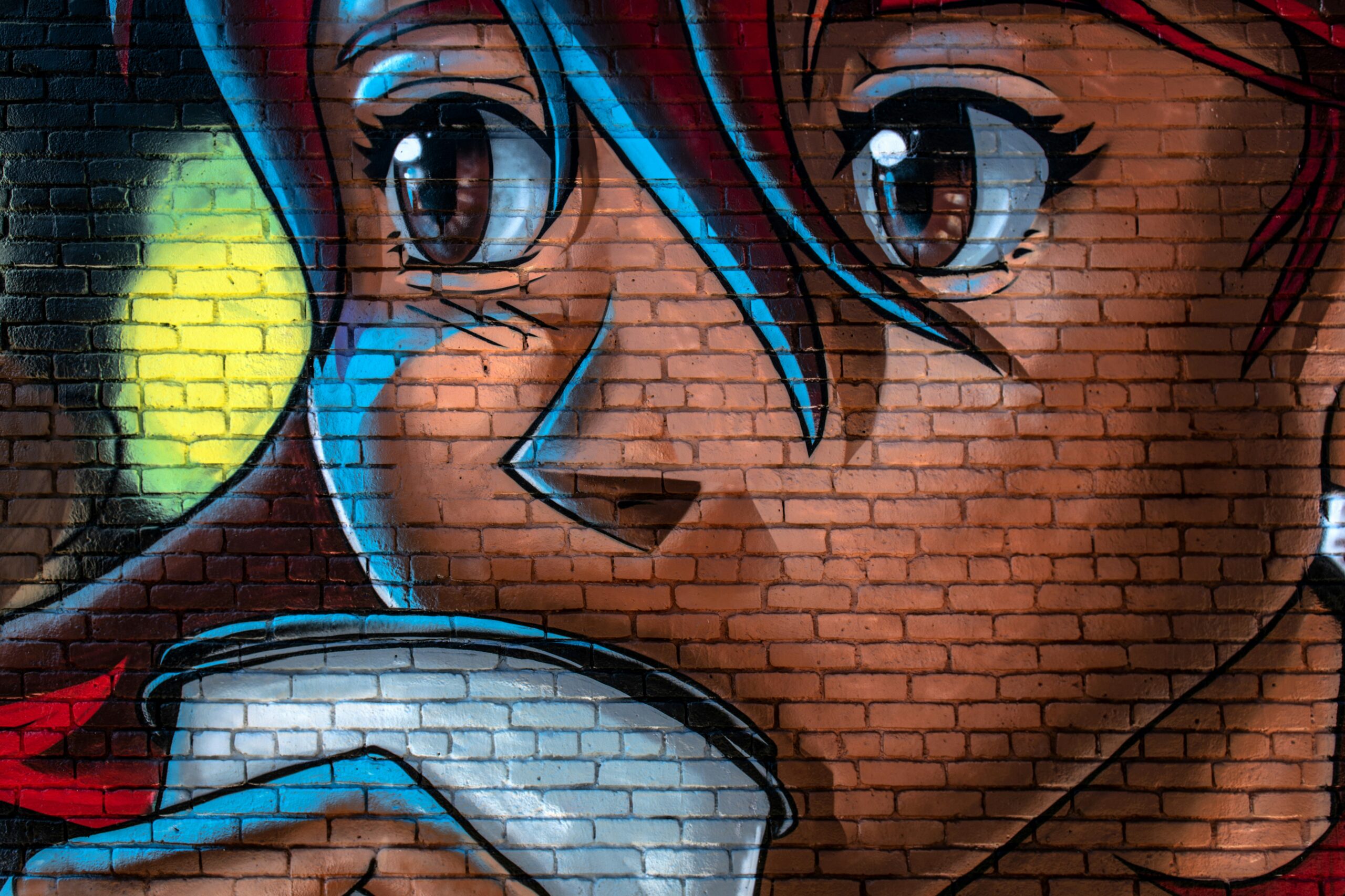
Photo by Tim Mossholder on Unsplash
Leave a Reply