
If you visit a city in any corner of Europe, you will almost certainly visit one of its iconic landmarks: the Eiffel Tower in Paris, the Colosseum or the Trevi Fountain in Rome, the Acropolis in Athens, or the Alhambra in Granada, and so on. This holds true for Iași as well. Nothing is more symbolic than the Palace of Culture, which stands as a timeless witness not only to the history of Iași, but also to the history of Moldavia and of Romania.
The ONE Culture project, co-funded by the Erasmus+ program, is implemented by a consortium of six European organizations to promote inclusion, provide adult educators with tools to support democratic culture and global awareness, and, most importantly, bring generations together through shared culture.
Moldova National Museum Complex of Iași, one of the six partners, is headquartered in the Palace of Culture – the symbol of the city and its beating heart almost since the city’s very inception. Although it is only a century old, the Palace traces its roots back to the Princely Court and later the Administrative Palace (the Palace of Governance), which over the centuries stood on the exact same site as today’s Palace of Culture. As a result, we cannot treat them as separate entities, they are deeply interconnected, both historically and architecturally. It can truly be said that Iași and the Palace of Culture grew up together, sharing a common past and, even more importantly, a common future.
Unity through cultural diversity, intercultural cooperation, and the protection and promotion of national and local traditions, these are the values that the European Union promotes, and the Palace of Culture stands as a symbol of these values. The Palace of Culture was originally an administrative and judicial building, the Administrative and Justice Palace, before transforming into a cultural hub housing four museums.
Palace of Culture could be used, through its four specialized museums, for examining how physical architecture acts as a classroom, it demonstrates that learning happens continuously across a lifespan, outside traditional school settings. Can museums move from passive viewing to active intergenerational learning?
The Palace functions today not as a stagnant museums, a stone structure, but as a lively focal point where seniors share local lore with grandchildren, and where public events, festivals, and square gatherings foster intergenerational dialogue, a place where teenagers and seniors could share public spaces and break cultural and mentalities barriers between them.
In what ways can physical spaces like the Palace of Culture be intentionally designed to foster interaction between older adults and youth? The art museum can be a place where you find artistic expressions that have influenced and shaped generations, for older adults a history museum is a place with historical transitions – from life under communism to post-1989 democratic shifts while younger learners offer modern civic perspectives, and the historical artifacts serve as neutral catalysts for dialogue.
Ethnographic Museum offers an accessible space for adult learners who hold informal, practical knowledge (e.g., traditional cooking, textile work, rural life customs) that may not be recorded in formal textbooks and at the Science & Technology Museum older adults bring context regarding mechanical systems and analog communication, while younger learners bring digital fluency.
The Palace of Culture is not just a building, a historical witness, it is a school, a place filled with textbooks, stories, artefacts and workshops that the public can use to discover culture, living memory, creative expression, and develop critical reflection.
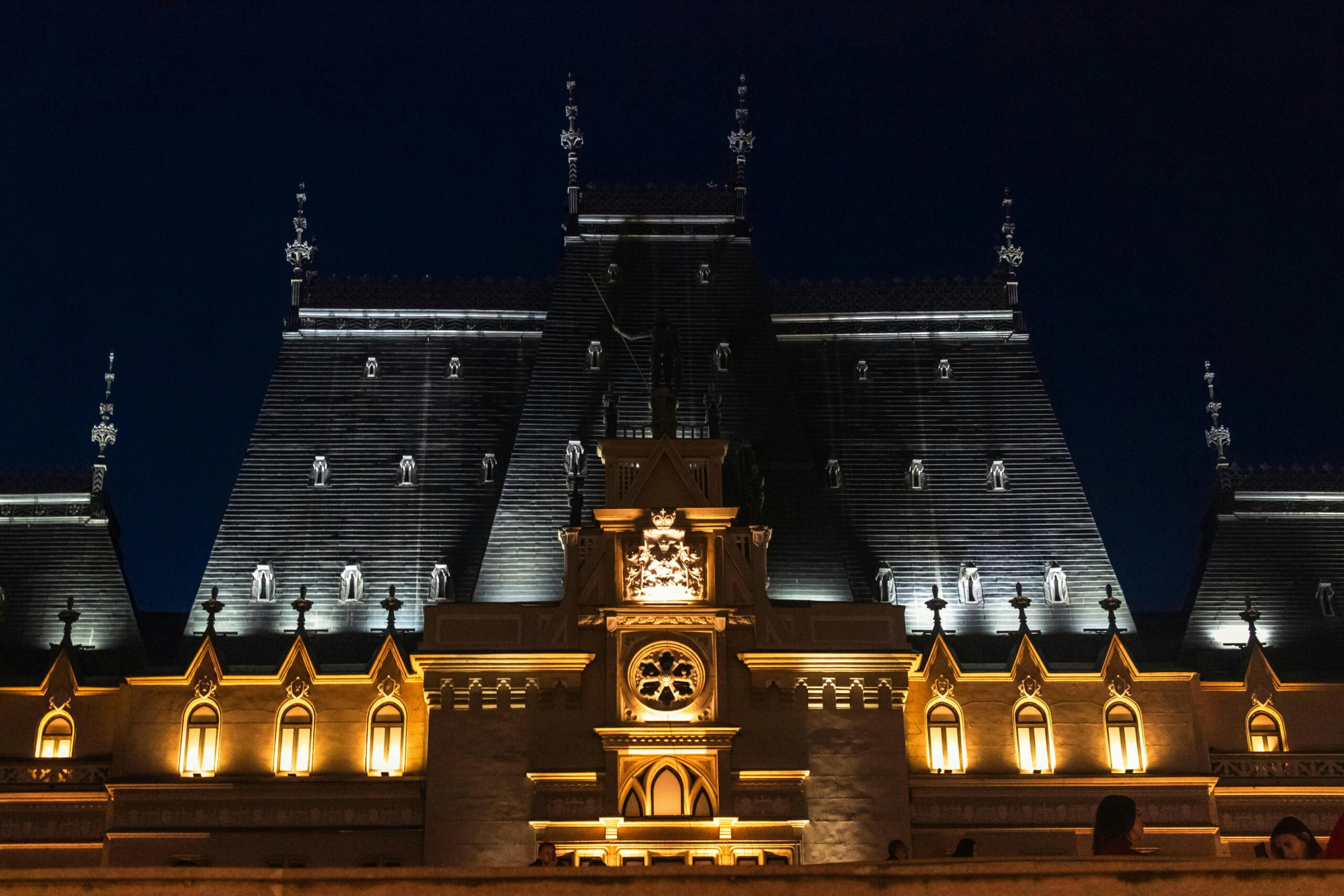
Photo by Reanimated Man X on Unsplash
Leave a Reply