
Whenever I tell people that I coordinate European cooperation projects, I am sometimes asked whether programmes such as Erasmus+ are worth the investment. It is a fair question. Public money should always be spent responsibly. After participating in and coordinating European projects for many years, however, I have come to believe that the greatest value of Erasmus+ is not only found in its reports, toolkits or training materials. Its real impact is much more human.Projects such as One Culture (see https://www.one-culture.eu/) produce tangible results that can be used by educators, cultural organisations and communities across Europe. These outputs matter. They help organisations improve their work, develop new methods and share knowledge beyond national borders. Yet if I had to identify the most important outcome, I would choose something that cannot easily be measured in numbers. It is the gradual development of trust and understanding between people who would otherwise never have met.
When I started working in European projects, my knowledge of other European countries was largely based on holidays, books and the news. Today, Europe has become something much more personal. I know colleagues and friends in Greece, Lithuania, Poland, Austria, Italy, Spain and many other countries. I have visited their museums, libraries, schools and local communities. I have learned about their history, traditions and daily challenges. More importantly, I have discovered how much we actually have in common.
One Culture has strengthened that experience. The project explores themes such as identity, culture, belonging and European citizenship. These are topics that often generate strong opinions, but working together has shown that meaningful conversations are possible when people are genuinely curious about one another. During exhibitions, workshops and partner meetings, we have repeatedly seen that cultural heritage can become a starting point for dialogue rather than division.
The European Union often speaks about creating social cohesion, active citizenship and mutual understanding. These concepts can sound abstract until you experience them yourself. In practice, they emerge when people from different backgrounds work together towards a shared goal. Over time, stereotypes disappear, trust grows and cooperation becomes natural. That is not something that happens overnight, but Erasmus+ creates the conditions in which it can happen.
Research supports these experiences. Evaluations of Erasmus+ consistently show that participants develop stronger intercultural competences, greater openness towards diversity and a stronger sense of European identity. The European Commission has repeatedly identified increased civic engagement, international cooperation and professional development as some of the programme’s most important long term impacts. Independent academic research likewise demonstrates that sustained international cooperation reduces prejudice by increasing meaningful personal contact between people from different countries.
Looking back, I realise that Erasmus+ has changed me as well. I know more about Europe than I did a decade ago. I understand different cultures better. I have built friendships that extend far beyond individual projects. These connections continue long after a project officially ends and often lead to new ideas, new partnerships and new initiatives. In that sense, Erasmus+ is not simply funding projects. It is investing in relationships.
At a time when Europe faces increasing polarisation and growing distrust, these relationships may be among the most valuable outcomes of all. Reports will eventually be archived and websites may disappear, but the understanding that develops between people continues. That is difficult to express in financial terms, yet it may well be one of the best investments Europe can make.
One Culture reminds us that culture is not only something we preserve in museums or celebrate during festivals. It is also the way we learn to understand one another. If European cooperation helps create that understanding, then its value reaches far beyond any individual project.
Suggested references
European Commission. Erasmus+ Annual Report (latest edition).
European Commission. Erasmus+ Programme Results Platform.
European Commission. European Education Area: Erasmus+ achievements.
Allport, G. W. (1954). The Nature of Prejudice. Addison Wesley. (The classic “contact hypothesis”, still widely cited in research on intercultural understanding.)
Pettigrew, T. F., & Tropp, L. R. (2006). “A meta analytic test of intergroup contact theory.” Journal of Personality and Social Psychology, 90(5), 751 to 783.
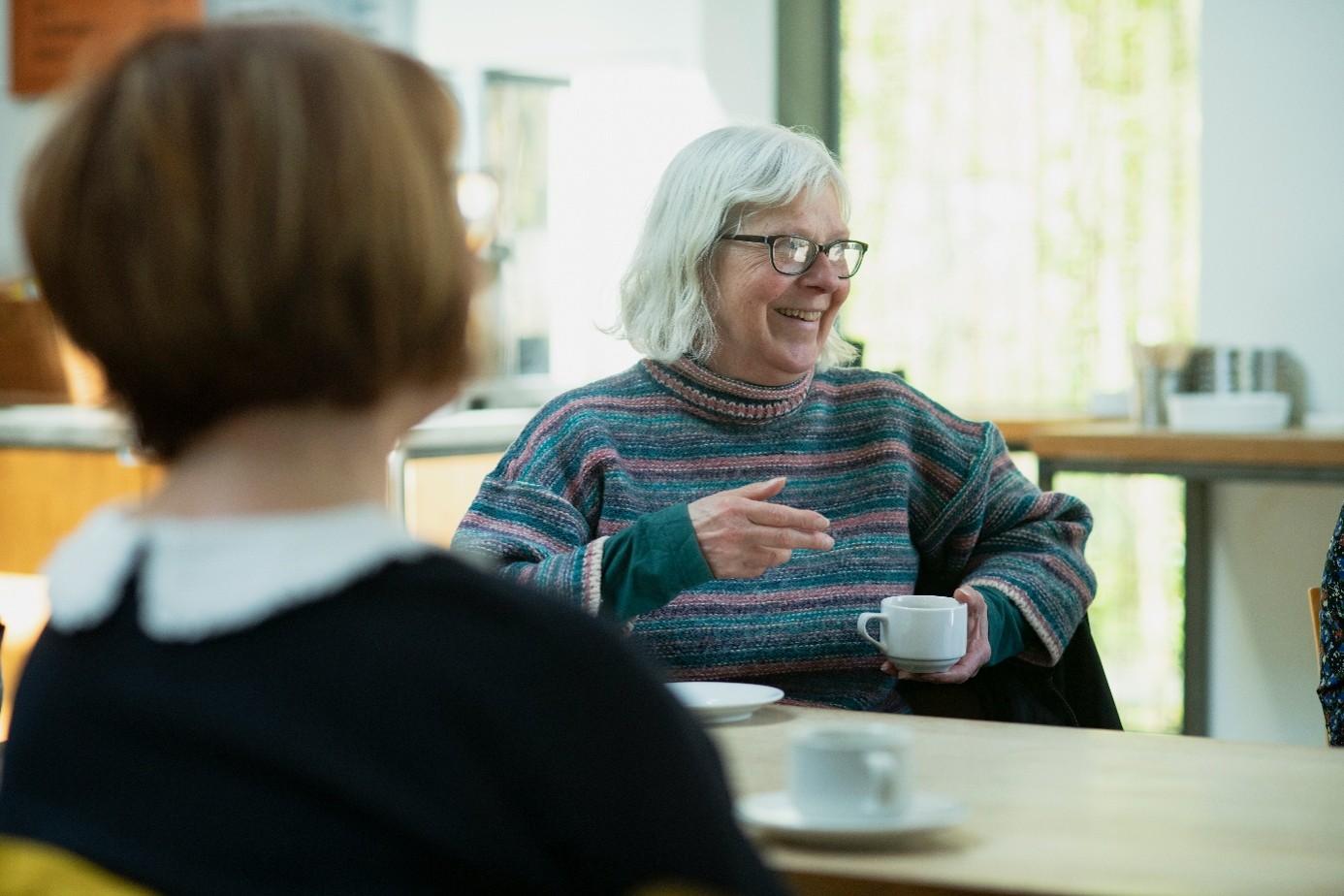
Photo by Age Cymru on Unsplash
Leave a Reply