
By Skill Up
European architecture stands as one of the most enduring expressions of the continent’s cultural identity. Over the centuries, Europe’s urban fabric has evolved into a layered palimpsest of styles, technologies, and symbolic languages that narrate shared histories, collective memories, and shifting societal values. Scholars often describe the architectural landscape as a visible archive of Europe’s past, capable of conveying political change, intellectual movements, and common aspirations through its material forms (Trachtenberg & Hyman, 2002). Cities of art are not simply aesthetic destinations; they are dynamic cultural ecosystems in which heritage, citizenship, learning, and innovation continuously interact.
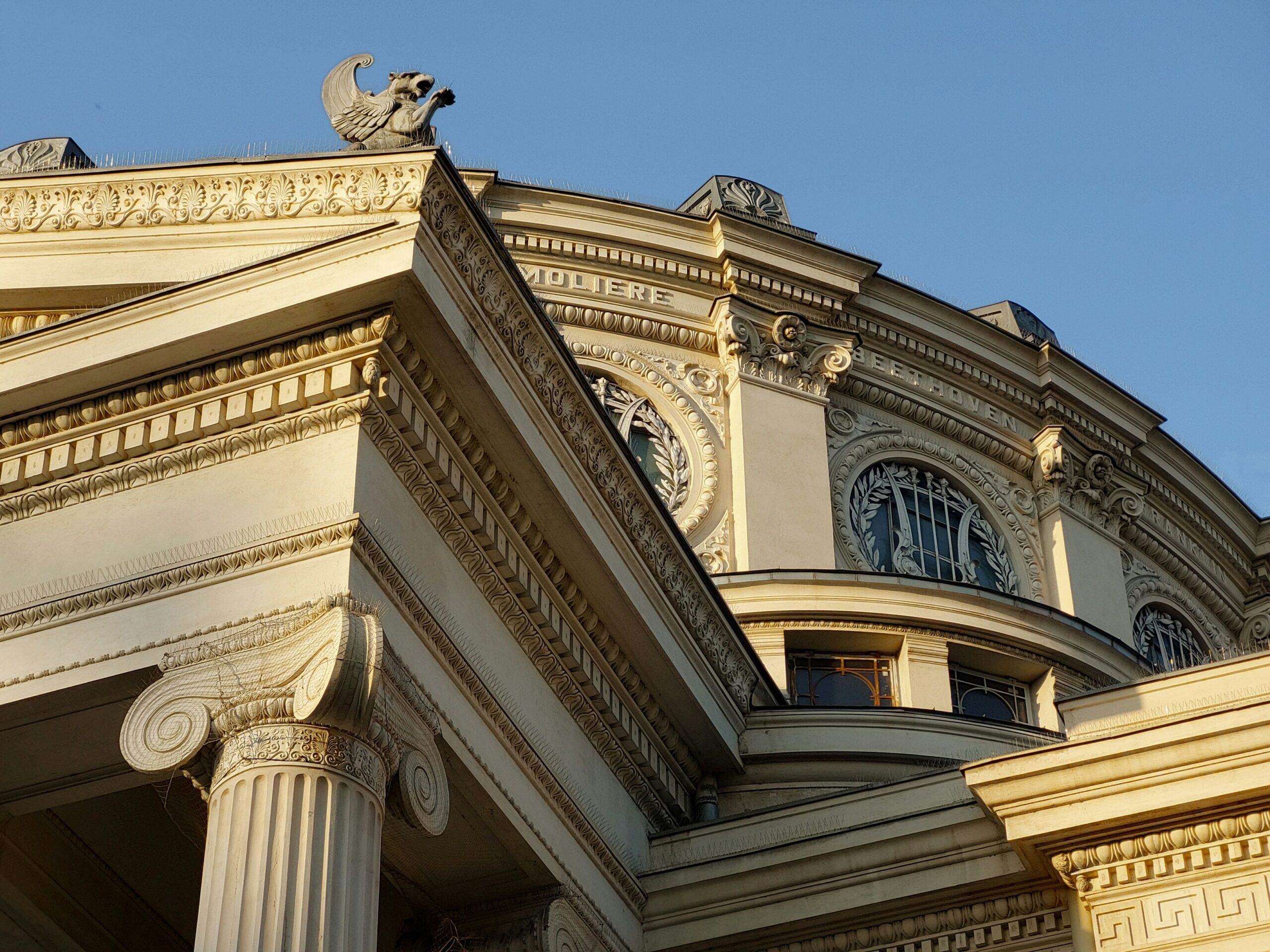
The legacy of classical antiquity provides one of the strongest cultural foundations shared across Europe. Greek and Roman architecture—temples, theatres, forums, and aqueducts—embodied ideals of rationality, proportion, and civic order that shaped centuries of artistic and urban development (Kostof, 1995). The Doric, Ionic and Corinthian orders have functioned not only as stylistic categories but as a common aesthetic language. From Paris to Berlin and from London to Budapest, these classical references remain visible in institutional buildings, museums, and universities, reinforcing a sense of continuity across time (Curl, 2018).
During the Middle Ages, European cities underwent profound transformations. Gothic and Romanesque architecture reshaped the urban experience, placing cathedrals, monasteries, and castles at the centre of city life. The construction of monuments such as Chartres, Milan or Cologne was the result of collective effort and technological innovation. Their vertical structures and stained-glass windows were more than artistic achievements; they conveyed theological meaning, communal identity, and new forms of urban organisation (Bony, 1983). The later Neo-Gothic revival, including the Sagrada Família in Barcelona, shows how medieval visual languages continue to resonate in contemporary Europe.
With the Renaissance, the city itself became a cultural and political project. Architectural treatises by Alberti and Palladio articulated principles of harmony, proportion, and perspective that connected urban form with the broader humanistic culture of the period (Wittkower, 1998). Florence, Rome, and Urbino exemplify this vision, where artistic expression, civic life, and spatial order converge. The Baroque period, developing extensively in Vienna, Prague, Madrid, Lisbon, and Warsaw, expanded this narrative potential through dramatic use of movement, light, and ornamentation. Baroque palaces, churches, and squares reflected the growing interconnectedness of European societies and the circulation of shared symbolic languages (Blunt, 1978).
The nineteenth and twentieth centuries introduced new paradigms linked to industrialisation, urban growth, and the upheavals of two world wars. Art Nouveau, with its organic lines and symbolic motifs, emerged as a response to modern anxieties and aspirations, particularly in Brussels, Paris, and Barcelona (Greenhalgh, 2000). Later, modernist architects such as Walter Gropius, Le Corbusier, and Alvar Aalto envisioned a functional, socially oriented architecture capable of addressing the demands of modern life (Frampton, 2020). Post-war reconstruction efforts in Berlin, Dresden, and Rotterdam demonstrated how memory, resilience, and urban identity could be negotiated through architectural form (Harrison, 2013).
Contemporary European architecture is increasingly shaped by sustainability, inclusiveness, and urban regeneration. The European Commission’s New European Bauhaus initiative encourages
an integrated approach to the built environment, connecting beauty, sustainability, and community well-being (European Commission, 2021). Today’s architectural projects prioritise accessibility, cultural diversity, and shared public spaces such as libraries, theatres, schools, and cultural centres, which act as platforms for lifelong learning and intercultural dialogue.
Within the Erasmus+ One Culture project, studying European architecture becomes an educational pathway that fosters aesthetic literacy, intercultural understanding, and historical awareness. Cities of art can be understood as open learning environments where centuries of exchanges, conflicts, adaptations, and innovations become visible and meaningful. Walking through Prague, Florence, Kraków, Porto, or Lyon means engaging with a layered cultural memory shaped by materials, techniques, and ideas that continue to influence Europe’s contemporary identity. Architectural heritage is not a static collection of monuments but a living resource that sustains social cohesion, community identity, and educational development. As UNESCO notes, cultural heritage contributes to sustainable development precisely because it enables communities to interpret and transmit shared values (UNESCO, 2015).
Understanding this architectural legacy means understanding Europe itself, a continent shaped by diversity, creativity, and centuries of cultural dialogue.
If you wish to explore how these ideas come to life today through education, culture, and international collaboration, we invite you to discover more about the One Culture project. Follow our official channels to access insights, stories, and resources that bring this vision to life and connect our shared European heritage with the learners and citizens of today.
References
- Trachtenberg, M., & Hyman, I. (2002). Architecture: From Prehistory to Postmodernity. Pearson.
- Kostof, S. (1995). A History of Architecture: Settings and Rituals. Oxford University Press.
- Curl, J. S. (2018). Making Dystopia: The Strange Rise and Survival of Architectural Barbarism. Oxford University Press.
- Bony, J. (1983). French Gothic Architecture of the Twelfth and Thirteenth Centuries. University of California Press.
- Wittkower, R. (1998). Architectural Principles in the Age of Humanism. Wiley.
- Blunt, A. (1978). Baroque and Rococo: Architecture and Decoration. Penguin Books.
- Greenhalgh, P. (2000). Art Nouveau 1890–1914. V&A Publications.
- Frampton, K. (2020). Modern Architecture: A Critical History (5th ed.). Thames & Hudson.
- Harrison, R. (2013). Heritage: Critical Approaches. Routledge.
- European Commission. (2021). New European Bauhaus: Shaping a more beautiful, sustainable and inclusive future. Publications Office of the European Union.
- UNESCO. (2015). Policy Document for the Integration of a Sustainable Development Perspective into the Processes of the World Heritage Convention. UNESCO Publishing.
Photo by Botond Czapp on Unsplash
Leave a Reply