By ENCRE
Throughout history, creativity has always been a space of encounter—often of conflict—between generations. Every cultural movement is, in some way, a response to what came before: sometimes in continuity, sometimes in rupture. Yet even rupture requires recognition. The act of creating always implies a dialogue with the past, a negotiation with inherited forms, stories, and values.
In this sense, intergenerational dialogue is not just a social goal—it is the engine of culture.
From oral traditions passed around the fire to modern collaborations between digital natives and analogue veterans, the passing of symbolic tools across generations is what keeps communities alive. In Europe, this takes on a particular resonance. The very idea of a shared European identity is constructed not only through treaties and policies, but through a long, unfinished conversation between generations of citizens, artists, thinkers, and workers.
The Workshop as a Place of Transmission
When education steps out of the classroom and into creative space—be it a museum, a library, a theatre or a workshop—it opens itself to something more than instruction: it becomes a place of shared authorship.
Intergenerational creative practice allows learners not just to coexist, but to co-produce meaning. In such settings, the older generation brings memories, perspectives, and embodied knowledge. The younger generation brings questions, urgency, and new languages. And both bring the capacity to surprise each other.
This is not always comfortable. The dialogue between generations is often marked by friction. But friction is creative. It generates sparks. It invites negotiation, curiosity, and the effort to translate. In the best of cases, it leads to empathy—not because everyone agrees, but because everyone listens.
Creativity as Common Ground
Creative methods offer a shared medium that transcends the asymmetries of age, experience, and authority. When a group collaborates on a comic strip, a photo story, or a soundscape, the rules of engagement shift. The focus moves away from “who teaches whom” toward “what can we build together.”
Recent practices in adult education have shown how intergenerational creative activities can be transformative—not just for learners, but also for educators. Projects like ONE Culture, funded by Erasmus+, are exploring this terrain: engaging young and senior adults in artistic co-creation as a way to learn about Europe, identity, and each other.
In one such activity, participants of different ages are invited to draw silent comics, leaving the speech bubbles empty. The strip is then passed to another participant—of a different generation—who fills in the dialogue. The result is not just a story, but a shared act of meaning-making, where neither generation holds the full narrative alone.
Learning, Together
What makes these practices powerful is not their form, but their intention. They are not about producing art. They are about producing understanding, where generations recognize themselves as part of a longer continuum. Not every activity will succeed. But every attempt reinforces the idea that learning Europe together means learning across time, as much as across borders.
In times of fragmentation and polarisation, this commitment to creative dialogue between generations may be one of the most civic things we can do.
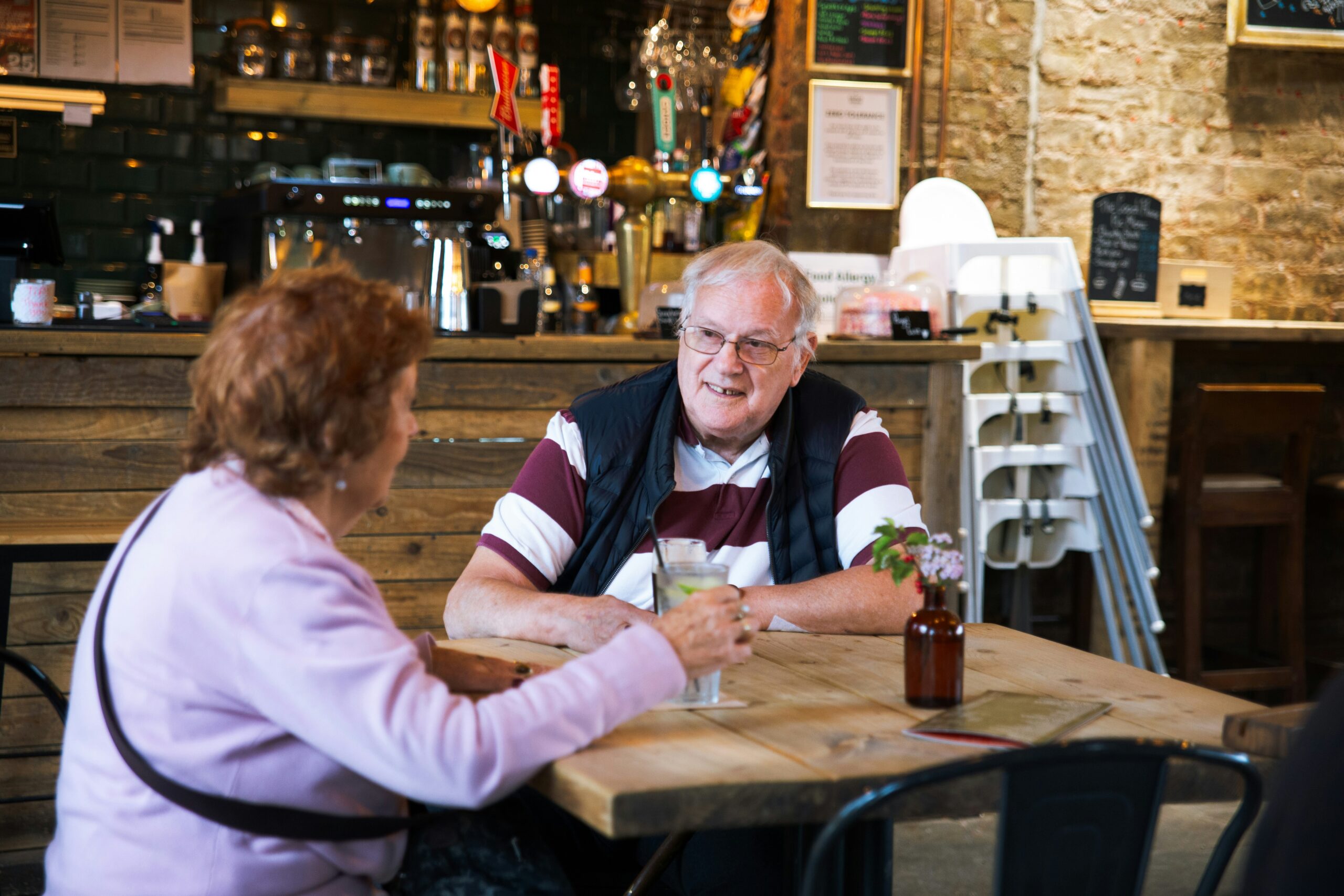
Photo by Centre for Ageing Better on Unsplash
Leave a Reply